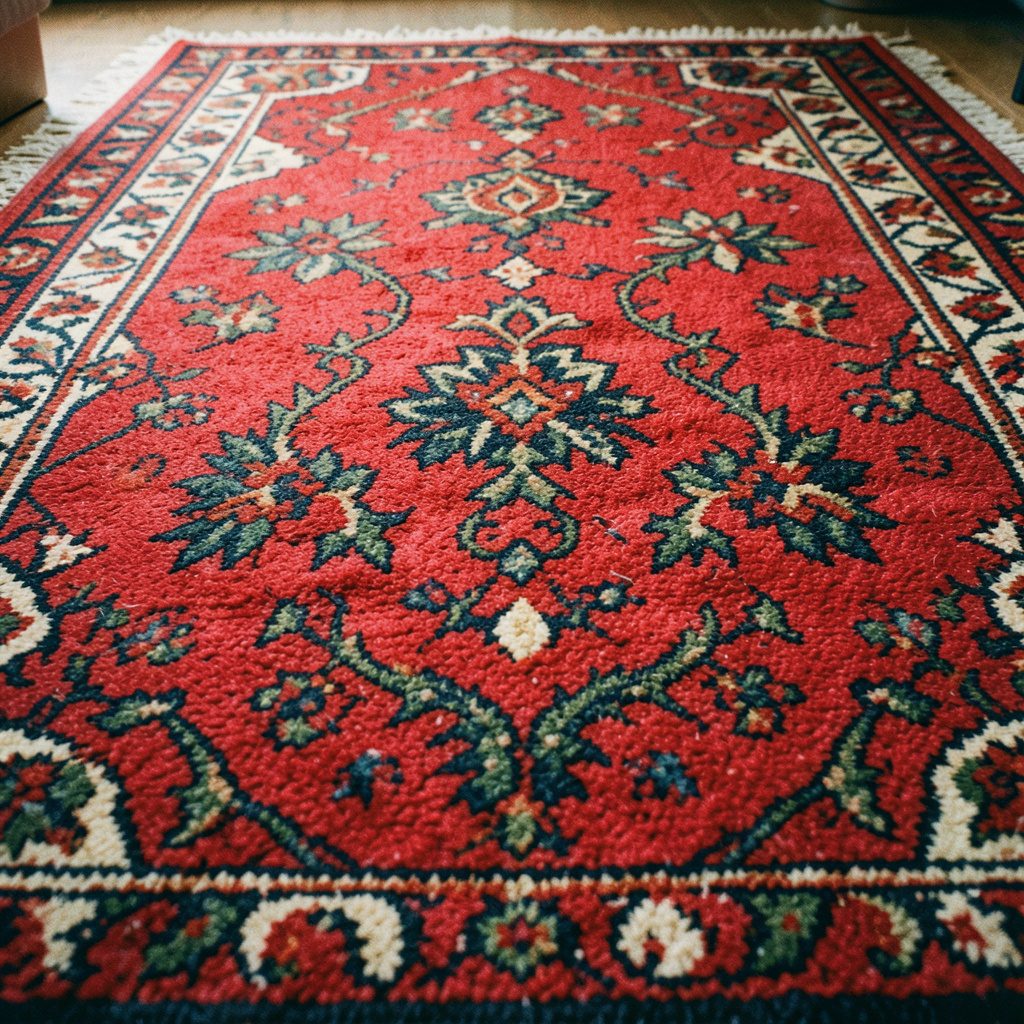
Free charted pattern for a needlepoint geometric coaster set
Four coordinated needlepoint designs need not come as a bought kit, printed sheet or paid download. This free charted coaster set uses a restrained six-colour palette and works well on 16-count canvas, either as separate gifts or a table ensemble. At roughly 12–13 cm finished, each coaster is substantial enough for a standard mug while remaining manageable for a beginner.
This guide includes complete symbol charts, colour guidance and a straightforward finishing route. You will need square needlepoint canvas, blunt tapestry needles, stranded cotton and a small pressing cloth; the stitching itself needs only six colours. These copyright-free charts may be printed or copied into a notebook for personal needlework, including non-commercial gifts, without buying a commercial pattern pack.
What the free chart includes
The set contains four related layouts: a concentric diamond, stepped bands, a chevron medallion and a framed central motif. Although each has its own character, they share the same key and colours, so they can be rearranged without looking unrelated. The geometry also provides useful practice for handling several thread shades while keeping the canvas square.
Every layout is drawn as a 12-by-12 colour grid. On the default 16-count canvas, each chart cell is worked as a five-by-five block of canvas intersections. This creates 60 intersections across the stitched centre, about 9.4 cm; a firm border and backing bring the finished coaster close to 12–13 cm. Work a test block if you prefer a larger or smaller object.
Canvas, needles and Australian thread choices
Choose evenly woven, square needlepoint canvas rather than counted cross-stitch cloth. A 16-count canvas gives a crisp edge for this scaled chart, while 14-count is easier to see and quicker to cover. Use a blunt tapestry needle that passes through the canvas without splitting it, and test the needle size on a scrap.
Specialist Australian embroidery shops and online stores commonly sell canvas by the sheet or metre, while stores such as Bunnings or Spotlight may carry generic felt, needles and yarn. Country makers often order supplies online, so compare postage charged in Australian dollars before buying six colours separately; a small bundle may be better value.
Use one strand of stranded cotton for the main areas on 16-count canvas. If your stitches sit loosely, tighten them gradually; if the canvas bows, ease the thread rather than pulling harder. Setting aside a couple of hours this arvo is enough for the first colour block, and the designs can continue over several evenings.
Reading the geometric charts
Each letter represents a thread colour, while a dot means that the canvas remains unworked. K is charcoal, R rust, O ochre, G eucalyptus green, C warm cream and B deep teal. The chart is read from the upper left, across each row and then downward. Because each cell becomes a block, bold areas are stitched row by row rather than counted as individual symbols.
For the sloped sections, the diagonal stitch reference explains how consistent diagonals preserve the geometry without pulling neighbouring blocks out of line. On the chevron, keep the background dots empty; on the framed motif, the cream outline should remain continuous around the outside.
DIAMOND
.....KK.....
....KGGK....
...KGGGGK...
..KGCCCCGK..
.KGCCCCCCGK.
.KGCCCCCCGK.
.KGCCCCCCGK.
.KGCCCCCCGK.
..KGCCCCGK..
...KGGGGK...
....KGGK....
.....KK.....

STEPPED BANDS
KRRRRRRRRRRK
KRCCCCCCCCRK
KRCOOOOOOCRK
KRCGGGGGGCRK
KRCGBBBBBBCRK
KRCGBBBBBBCRK
KRCGGGGGGCRK
KRCOOOOOOCRK
KRCOOOOOOCRK
KRCGGGGGGCRK
KRCGBBBBBBCRK
KRRRRRRRRRRK

CHEVRON
CCCCCCCCCCCC
C..........C
C.BBBBBBBB.C
C.B......B.C
C.B..RR..B.C
C.B.RRRR.B.C
C.B.R..R.B.C
C.B.RR.RR.B.C
C.B.RRRR.B.C
C.B..RR..B.C
C.BBBBBBBB.C
CCCCCCCCCCCC

FRAMED MEDALLION
CCCCCCCCCCCC
CBBBBBBBBBBC
CGGOOGGOOGGC
CGBBBBBBBGC
CGBOKKOOKBGC
CGBOKKOOKBGC
CGBOKKOOKBGC
CGBOKKOOKBGC
CGBOKKOOKBGC
CGBBBBBBBGC
CGGOOGGOOGGC
CCCCCCCCCCCC
Stitching the four coasters
Mark the centre of the canvas lightly and divide the working area into quarters before the first stitch. Work each colour block from the anchoring edge inward, making five stitches across and five rows down for every chart cell. Keep those rows parallel to the canvas edge, as a small ruler underneath the work can prevent the outer edge from drifting.
Sit comfortably with the canvas supported on a frame or hoop if preferred. Each canvas intersection takes one diagonal tapestry stitch. Bring the needle up and down through the same general area without forcing it through a hole already occupied by thread. Smooth each completed row, but do not press hard enough to flatten the stitches before the piece is blocked.
Check the width after the first two rows of blocks and compare it with 9.4 cm. If the row measures differently, adjust the tension rather than adding or removing stitches. Finish with the outside colour shown by the final row, tie the thread securely on the back and clip the tails close to the canvas.
Blocking, edges and fabric backs
After all four coasters are stitched, place them face down on a clean towel and press from the reverse with a warm, dry iron. Use steam sparingly over wool or synthetic blends, and shape rather than stretch the canvas. Let each piece cool completely before mounting.
For a neat reverse, use plain cotton or felt cut about 2 cm larger than the blocked centre on every side. Although the example is for cross-stitch, this fabric backing method adapts to needlepoint by trimming the canvas and securing the fabric around its edges. Choose a backing that hides the stitched floats without making the coaster rigid.
Wrap the canvas to the back, catch it with small even stitches and finish with a firm blanket stitch around the perimeter. Keep the edge consistent across all four pieces so they sit squarely beside one another. Store them face up under a light cloth rather than stacking the decorated faces.
Colour choices for Australian spaces
The palette was chosen to sit easily in Australian interiors without tying the set to one decorating trend. Eucalyptus green and deep teal reflect coastal and bush tones, while ochre and rust bring warmth to a pale timber table. Warm cream keeps the borders readable and stops the darker colours from dominating.
Strong afternoon light can reach west-facing rooms in Perth, Adelaide and other hot cities, so rotate the coasters and avoid leaving one colour in permanent sun. Brisbane and Darwin’s humidity also makes a breathable cotton backing useful. At Australian makers’ markets, a handmade set in these shades often pairs naturally with ceramics in similar natural colours.
Recommendations for a coordinated set
Each design can stand alone, but the set gains coherence when the same border width, backing fabric and finishing thread are used throughout. Before cutting the canvas, arrange the four charts so the strongest motifs face outward on the table and the stepped bands sit opposite them.
- Test one five-by-five block on spare canvas to confirm the thread shade and tension before committing to the full set.
- Finish the diamond first, then use it as the gauge and edge reference for the other three coasters.
- Mark the reverse lightly with initials and the month, which is especially useful for a wedding or housewarming gift.
- Use leftover cream and neutral threads for the backs instead of buying a second matching colourway.
- Keep every coaster the same finished size, even if you vary the number of coloured rows at the border.
The diagrams are intentionally simple, so thread substitutions are safe: keep the value contrast between adjacent colours and treat the charcoal or teal as the darkest anchor. The same 12-centimetre edge and soft backs give the four coasters a consistent profile on a coffee table, while the initials marked on the reverse keep the set easy to identify.