Knitting a Simple Baby Blanket with Seed Stitch Borders
A small knitted blanket is a rewarding project for practising even tension, neat edges and gentle finishing. Seed stitch borders give a plain fabric a subtle texture while helping the sides lie flat, making this design suitable for a first baby project or a quick handmade gift.
The pattern below uses straightforward shaping and one main yarn colour. It can be adapted for a pram blanket, bassinet cover or light play mat, although a knitted blanket should never be used as loose bedding for an unattended baby.
Australian knitters have plenty of practical yarn choices, from machine-washable acrylic at Spotlight or Lincraft to soft Australian merino from Bendigo Woollen Mills and local independent shops. Consider the season and your city’s climate: a cotton blend may suit humid Brisbane, while a breathable merino blend can be useful in Melbourne or Canberra.
Choosing the yarn and size
For a manageable blanket, choose an 8-ply yarn, also called DK or light worsted weight, in a smooth fibre that will not shed easily. Acrylic is affordable and simple to wash, while superwash wool offers warmth and resilience. Cotton can feel cool and crisp, though it may produce a heavier fabric and less springy stitches.
A practical finished size is approximately 70 by 90 centimetres. This works well as a pram or lap blanket and does not require an excessive number of stitches. For a larger cot blanket, increase the central stitch count in multiples of two while keeping the border width unchanged.
Check the yarn label for washing instructions before buying. Baby gifts often need frequent laundering, so a yarn that can be washed gently in a machine may be more useful than a delicate hand-wash-only fibre. Avoid novelty yarns with loose loops, long hairs or small detachable decorations.
Understanding the seed stitch border
Seed stitch alternates knit and purl stitches so that small raised bumps are distributed across the fabric. It looks the same on both sides and gives a simple blanket a refined edge without requiring cables, lace or colourwork.
This pattern uses a 6-stitch border at the beginning and end of every row, plus a 6-stitch border at each side. The middle is worked in stocking stitch: knit rows on the right side and purl rows on the wrong side. Because stocking stitch naturally curls, the textured border is important for stability.
To keep the edge consistent, pay attention to the first and last six stitches on every row. On a right-side row, work those border stitches as knit, purl, knit, purl, knit, purl. On a wrong-side row, reverse the sequence so the bumps remain evenly spaced.
A straightforward knitting method
Cast on 94 stitches using a flexible long-tail cast-on. This gives six stitches for the left border, 82 stitches for the centre, and six stitches for the right border. If your tension differs significantly from the suggested gauge, make a small swatch before beginning the blanket.
Work the first six rows entirely in seed stitch. This establishes a firm lower edge. Continue with the following row pattern:
- Rows 1 and all right-side rows: seed stitch across six stitches, knit 82 stitches, then seed stitch across six stitches.
- Rows 2 and all wrong-side rows: seed stitch across six stitches, purl 82 stitches, then seed stitch across six stitches.
- Repeat these two rows until the blanket measures about 84 centimetres.
- Work the final six rows entirely in seed stitch and bind off loosely.
The total length may vary according to your yarn, needle size and personal tension. Measure from the cast-on edge without stretching the fabric. A few centimetres of variation will not affect the usefulness of the blanket.
Materials and working choices
| Item | Practical choice | Why it helps |
|---|---|---|
| Yarn | 8-ply washable acrylic or superwash merino | Easy care and comfortable texture |
| Needles | 4 mm straight or circular needles | Suitable for DK-weight yarn |
| Quantity | Approximately 500–650 g | Allows for size and tension differences |
| Stitch count | 94 stitches | Creates a 6-stitch border around an 82-stitch centre |
| Gauge guide | About 22 stitches per 10 cm | Helps estimate the finished width |
| Finishing tools | Tapestry needle and blunt scissors | Useful for weaving in ends safely |
Circular needles can be more comfortable even when knitting flat because the cable supports the weight of the growing blanket. Australian knitters working in a warm room may also find bamboo needles easier to hold than slick metal needles if their hands become humid.
Needle size is only a starting point. If your fabric feels stiff, use a larger needle; if it looks loose and uneven, try a smaller one. A baby blanket should be soft and flexible rather than dense and board-like.
Keeping the edges neat
Place a removable stitch marker between the left border and the centre if you find it difficult to track the pattern. The marker will not replace counting, but it makes the change from seed stitch to stocking stitch easier to see.
When changing from knit to purl, bring the yarn between the needles rather than over the top. Accidental yarn overs are a common cause of extra stitches. Count the centre section every few rows, particularly after the first ten rows, when mistakes are easiest to correct.
Avoid pulling the first stitch tightly. A relaxed edge stitch makes blocking simpler and prevents the blanket from narrowing along the sides. If the border appears wider or tighter than the centre, gentle blocking may even out the appearance, but it cannot fully correct inconsistent tension.
For additional stitch vocabulary, a compact guide to straight stitch techniques can be useful when adding a small embroidered initial or motif after knitting. Keep any embellishment secure and flat, with no beads, buttons or loose threads that could become hazardous.
Adapting the design for different homes
A single-colour blanket has a calm, classic appearance, but narrow stripes can make the project more engaging. Change colour after a complete pair of stocking-stitch rows and carry unused yarn neatly up the side. For a polished finish, use two related shades rather than several high-contrast colours.
Australian yarn shops often stock local merino in natural cream, eucalyptus green, dusty blue and ochre. These colours suit contemporary nurseries and are easier to combine with existing blankets. In Sydney or Perth, a lighter cotton-merino blend may be more comfortable for much of the year than a thick pure-wool fabric.
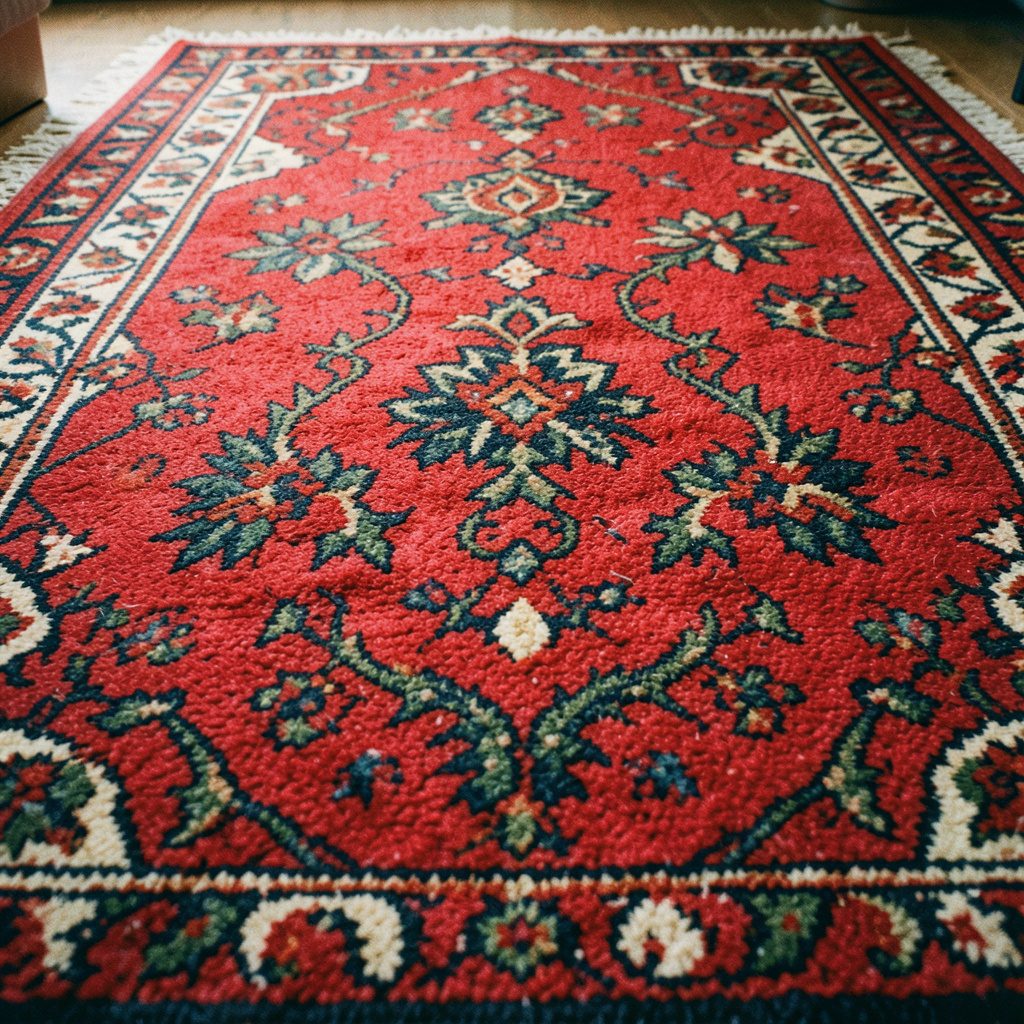
The stitch pattern can also inspire other needlework projects. A small woven or embroidered rug may use a related geometric texture; guidance on small carpet patterns can help when translating a simple border idea into a chart. Keep the knitted blanket itself free from hard or dangling additions.
Washing, blocking and safe use
When the knitting is finished, weave each yarn tail through several stitches on the wrong side, changing direction before trimming. Do not tie bulky knots, as they can show through the fabric and create uncomfortable lumps. Check both sides for loops that could catch on fingers.
Wash according to the yarn label, preferably before gifting so the fabric settles and any manufacturing residue is removed. Lay the blanket flat on clean towels, smooth it into a rectangle and allow it to dry naturally. Do not hang a wet blanket, since the weight can stretch the stitches.
Safety matters more than decorative appeal. Australian parents commonly follow Red Nose safe-sleep guidance, which recommends keeping loose bedding and soft items out of a baby’s sleep space. A handmade blanket is best used while an adult is present, for pram walks, cuddling or floor play, rather than tucked around an unattended infant.
Where a project notebook includes wider online leisure resources, it may contain unrelated reviews such as cluster-pay games; these should remain separate from craft planning and should never be treated as a source for knitting instructions. For this blanket, the useful records are the yarn label, gauge swatch, wash instructions and finished measurements.
Finishing details worth checking
Before presenting the blanket, inspect the seed stitch border for missed purls, uneven tension and accidental holes. A loose end can be secured again with a tapestry needle. If the cast-on edge feels tight, a gentle steam-free wet block may relax it, provided the yarn care label permits washing.
Australian consumer products are covered by general safety laws, and mandatory standards apply to products such as cots and other children’s equipment. A handmade blanket is not a substitute for compliant sleep equipment, so avoid describing it as a cot safety product or attaching it permanently to a pram or bassinet.
A simple care note makes the gift more useful: list the fibre, washing method and approximate dimensions. With its reversible seed stitch border, washable yarn and uncomplicated centre, this blanket offers a durable project that can be repeated in new colours and sizes without changing the basic technique.